Brewing Up a Dream.
What does it take to launch a craft beer brand on a continent where giants own the shelves, the distribution, and the customer's habits? One founder shares the unfiltered story — from the first batch to the first bar.
David vs. the Brewery
The African beer market is not the place you go to make friends with the incumbents. SABMiller, Heineken, Diageo, East African Breweries — these are companies with century-deep roots in African distribution networks, marketing budgets that dwarf most countries' tourism spend, and relationships with every major retailer, bar, and roadside kiosk on the continent.
Against this backdrop, the founder of this episode — a Nairobi-based entrepreneur who spent years in the beverage industry before deciding to build his own brand — made a choice that his friends called brave and his accountant called alarming: he decided to brew his own beer.
The Recipe Comes First. Then Reality.
Every brewery starts with a recipe. This one started on a kitchen stove, scaled to a garage, and eventually moved into a licensed small-batch brewing facility — a journey that took eighteen months and surfaced a problem the founder describes as "the thing nobody warns you about in craft beer: the gap between making a beer you love and making a beer that survives ambient temperatures, inconsistent refrigeration, and a distribution journey that is, in the kindest possible terms, adventurous."
The African supply chain is not unkind to beer, exactly. It is merely indifferent to the specific chemical and biological processes that determine whether a craft beer arrives at the consumer in the state the brewer intended.
Temperature control was the first engineering problem. Most craft beers are designed for cold chains that don't skip steps. The founder's team spent months reformulating the base recipe and the stabilisation process to produce a product that could tolerate ambient storage for up to four weeks without a perceptible quality change.
The Licensing Labyrinth
If the brewing was hard, the licensing was nearly catastrophic.
Alcohol licensing in Kenya — and across much of sub-Saharan Africa — is a multi-jurisdictional exercise that involves national regulators, county governments, and a rotating cast of agencies with overlapping mandates and occasionally conflicting requirements. The founder estimates that the licensing process for his brewery added fourteen months and approximately 40% of his initial capital budget to his pre-revenue period.
"There is no manual," he told us. "You hire a lawyer who's done it before and you pay them to navigate a process that changes between the time you start and the time you finish. And you pray."
Finding the Customer
The product eventually launched — on time, which is almost an achievement in itself. But finding the customer proved to be the next frontier.
The craft beer consumer in Nairobi is real: young, educated, income-confident, and specifically looking for alternatives to the mass-market brands. But they are concentrated, in the early days, in a relatively small number of venues — artisanal restaurants, rooftop bars, a handful of boutique hotels.
The founder's initial distribution strategy was hyper-focused: twenty accounts, all in Nairobi's Westlands and Karen neighbourhoods. A small enough geography to manage personally. A specific enough customer profile to build brand loyalty before trying to scale.
"I see every founder who tries to scale distribution before they have product-market fit in a single neighbourhood and I want to sit them down," he said. "Scale is a reward you earn. It is not a strategy."
What He Knows Now
Two years after launch, the brand is in 60 outlets across Nairobi, has a presence at four major music festivals, and is in early talks with a regional distributor for expansion into Uganda and Rwanda. The numbers are not yet the stuff of press releases, but they are moving in the right direction.
More importantly, the founder has learned something about the African consumer that he wishes he had understood at the start: the attachment to local identity runs deeper than most brand strategists appreciate.
"People don't just want a good beer. They want a beer they can feel proud of. That's local. That reflects who they are. If you can give them that alongside quality, you have something that Heineken cannot replicate with a marketing budget."
That insight, in an industry dominated by scale players, might be the most durable competitive advantage of all.
“People don't just want a good beer. They want a beer they can feel proud of — local, reflecting who they are. If you give them that alongside quality, you have something Heineken cannot replicate with a marketing budget.”
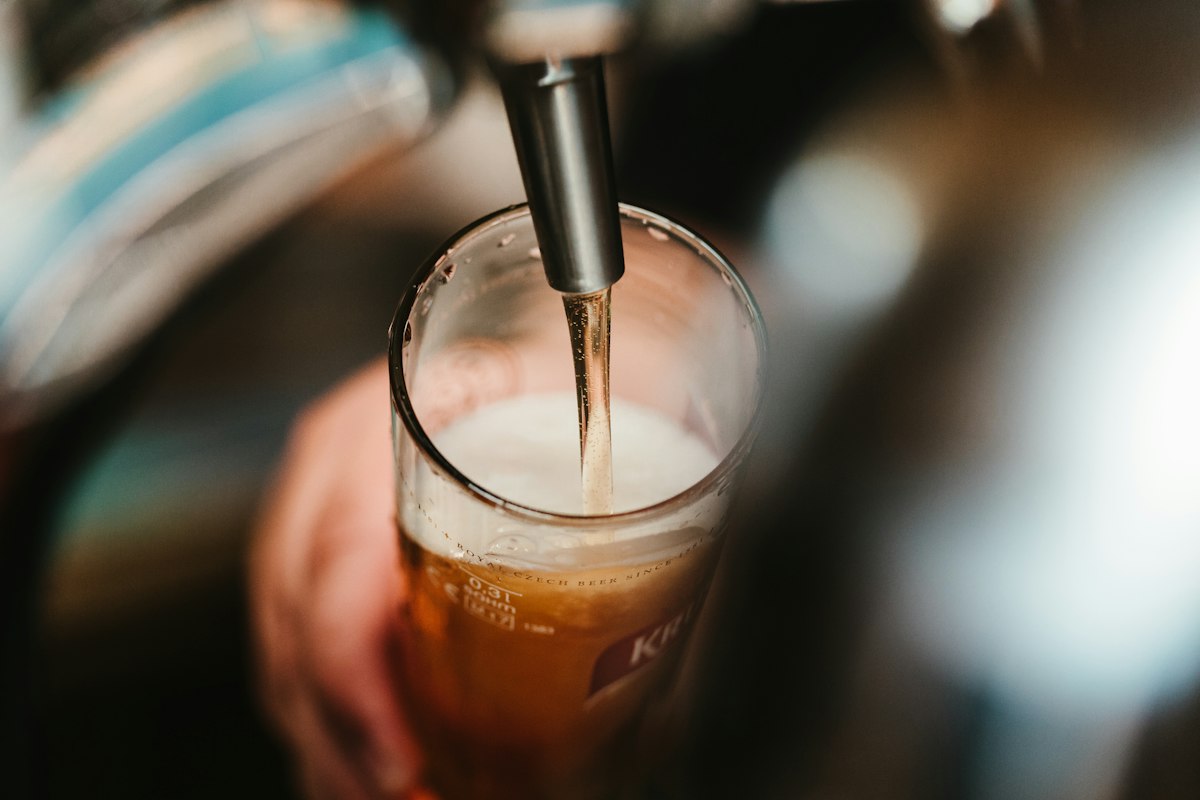
The first small-batch brewing session — a 100-litre test run in a licensed facility.
© Hustle Yangu
Bottles from the first production run, ready for quality assessment.
© Hustle Yangu

The founder reviews distribution routes for the Westlands launch phase.
© Hustle Yangu

Presenting the brand story at a retailer pitch — building the account by account.
© Hustle Yangu
 Deep Tech
Zerobionic: Building the Future from Africa
What does it mean to build deep tech from Africa? Zerobionic is answering that question in real time — engineering solutions at the edge of human potential, with the continent's constraints as fuel, not obstacle.
 City Spotlight
Addis Ababa Is Not What You Think
The world has a fixed image of Addis Ababa. We went to find out how far from that image the city has moved — and came back with something far more interesting than we expected.
 Hardware
Quepay: The Kenyan Startup Building Hardware, Not Apps
Quepay doesn't fit the Nairobi startup template. No app. No subscription model. Just engineers with soldering irons, building payment infrastructure for the physical world from the ground up.